

Choosing the Right Quick Connect Couplings for Your Application
In this guide, we explain the main types of quick connect couplings and the importance of choosing the right one to suit your application.
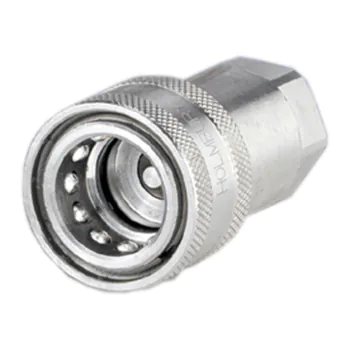
/ 2
Quick connect couplings, also known as quick release or quick disconnect couplings, allow hydraulic and pneumatic lines to be connected and disconnected quickly without requiring tools to separate the connection.
They are used across a wide range of applications, from hydraulic machinery and test rigs to manufacturing, transportation, cooling systems and pneumatic equipment.
However, choosing the correct coupling isn’t simply a case of selecting one that fits the hose.
Pressure, flow rate, connection type, operating environment, fluid compatibility and the frequency of connection and disconnection all need to be considered.
In this guide, we explain the main types of hydraulic quick connect couplings and the factors to consider when selecting one for your application.
What Is a Quick Connect Coupling?
A quick connect coupling is a mechanical connection that allows two sections of a fluid or gas line to be connected and disconnected efficiently.
Most quick connect couplings consist of a male and female half. When connected, an internal valve mechanism allows fluid to flow through the coupling. When disconnected, the valves close to help prevent fluid loss and contamination.
This makes quick connect couplings particularly useful where hydraulic or pneumatic equipment needs to be regularly removed, changed or serviced.
Fluid Power Services supplies a wide range of hydraulic and pneumatic quick connect couplings, including ISO A, ISO B, flat face and MacDonald & Maclock-type couplings.
Why Use Hydraulic Quick Connect Couplings?
Quick connect couplings can provide several practical benefits.
• Faster Connection and Disconnection
Equipment can be connected or disconnected much more quickly than with traditional threaded connections. This can be particularly useful for machinery that requires regular maintenance or where attachments need to be changed frequently.
• Reduced Downtime
Being able to disconnect hydraulic lines quickly can make maintenance and component replacement more efficient. For businesses where machinery downtime directly affects productivity, reducing the time required for routine interventions can be valuable.
• Easier Maintenance
Quick release couplings allow components to be isolated and removed without necessarily dismantling an entire hydraulic circuit. This can make servicing pumps, motors, cylinders and attachments more straightforward.
• Reduced Fluid Loss
Many quick connect designs incorporate shut-off valves that close when the coupling is disconnected, helping minimise fluid leakage. The exact level of fluid loss depends on the coupling design and application.
Types of Quick Connect Couplings
There are several types of hydraulic quick connect couplings, each suited to different applications.
• ISO A Quick Connect Couplings
ISO A couplings are commonly used across hydraulic and general fluid power applications. Fluid Power Services stocks ISO A couplings in both carbon steel and stainless-steel configurations. The appropriate material will depend on factors such as operating environment, corrosion exposure and application requirements.
• ISO B Quick Release Couplings
ISO B couplings are another widely used quick-release coupling design. They are available in different materials, including:
o Carbon steel
o Brass
o Stainless steel
The choice of material should take account of the environment and the fluid being handled.
• Flat Face Couplings
Flat face quick connect couplings are commonly selected where minimising fluid spillage and contamination during connection and disconnection is particularly important. Their design creates a relatively flush connection when separated, making them suitable for applications where cleanliness is important. Fluid Power Services stocks a range of flat face couplings, including HQ, H and HSS series.
• MacDonald & Maclock-Type Couplings
MacDonald & Maclock-type couplings are designed for applications involving high-pressure compressed air or inert gases. They are used in environments including engineering, chemical plants and oil refineries. This demonstrates why coupling selection needs to be based on the actual application rather than simply the physical connection size.
How to Choose the Right Quick Connect Coupling
Before selecting a hydraulic quick connect, consider the following factors.
1. Operating Pressure
The coupling must be rated for the maximum pressure it will experience. Don’t select a coupling based only on the system’s normal operating pressure. Pressure spikes and other operating conditions may also need to be considered. The coupling rating should be appropriate for the complete system, including the hose, fittings and connected equipment.
2. Flow Rate
A coupling needs to allow sufficient hydraulic flow without creating excessive pressure drop. A coupling that is too small for the required flow can restrict the system and affect machine performance. The correct size therefore depends on more than the hose connection.
3. Connection Size
The coupling needs to be compatible with the hose, pipe or component to which it will be connected. Common considerations include:
o Thread type
o Port size
o Hose bore
o Male/female configuration
o Connection standard
Getting the physical connection correct is essential, but it should be considered alongside pressure and flow requirements.
4. Hydraulic Fluid Compatibility
The coupling materials and seals need to be compatible with the hydraulic fluid being used. Different applications may use different hydraulic fluids, oils or specialist media. Seal material is particularly important because an incompatible seal can deteriorate, resulting in leakage or premature failure.
5. Operating Environment
Where will the coupling be used? A coupling operating indoors in a clean manufacturing environment may have very different requirements from one exposed to:
o Saltwater
o Moisture
o Dirt
o Chemicals
o Extreme temperatures
o Outdoor conditions
o Heavy vibration
Stainless steel may be appropriate for applications where increased corrosion resistance is required.
6. Frequency of Connection
How often will the coupling be disconnected? If a connection is only expected to be disconnected during occasional maintenance, a different design may be appropriate compared with an application where operators connect and disconnect equipment multiple times per day. The coupling should be selected for the expected frequency of use and operating conditions.
7. Connection Under Pressure
Some quick connect couplings are designed for specific connection or disconnection conditions, while others may require the system to be depressurised first. Never assume that a coupling can safely be connected or disconnected under pressure simply because it is a quick-release design. Always follow the manufacturer’s specifications and the requirements of the hydraulic system.
Hydraulic Quick Connect Couplings and Contamination
Contamination is one of the major considerations when disconnecting hydraulic equipment.
Dirt entering an open hydraulic connection can subsequently circulate through the system and potentially damage pumps, valves and other precision components.
Keeping coupling faces clean and using suitable protective caps or plugs when disconnected can help reduce contamination risks.
This is particularly important in applications where hydraulic cleanliness is critical.
Common Quick Connect Coupling Applications
Quick connect couplings are used across many industries.
Examples include:
• Hydraulic machinery
• Construction equipment
• Agricultural machinery
• Test rigs
• Manufacturing equipment
• Transportation
• Cooling systems
• Pneumatic equipment
• Pharmaceutical and food applications
• Maintenance equipment
Fluid Power Services supplies quick connect couplings for hydraulic and pneumatic applications across a broad range of industries.
Quick Connect Coupling Checklist
Before ordering, make sure you know:
• Required coupling type
• Connection size
• Thread type
• Operating pressure
• Maximum pressure
• Required flow rate
• Hydraulic fluid
• Seal material
• Operating temperature
• Environmental conditions
• Connection frequency
• Required material
• Whether connection under pressure is required
If you’re unsure, providing this information to a hydraulic specialist can help ensure the coupling is correctly specified.
Why Correct Coupling Selection Matters
The right quick connect coupling should provide a secure connection while allowing the required hydraulic or pneumatic flow.
Choosing incorrectly can result in:
• Leakage
• Excessive pressure drop
• Premature wear
• Connection failure
• Hydraulic contamination
• Reduced system performance
• Increased maintenance requirements
The coupling is a relatively small component, but it forms an important part of the hydraulic circuit.
Need Help Choosing a Hydraulic Quick Connect?
Fluid Power Services supplies a wide range of hydraulic and pneumatic quick connect couplings from established manufacturers, including Parkair, CEJN, Holmbury and Snap-tite. Their technical team can help identify a suitable coupling for your application.